
 Albert Avany, MDCardiologist
Heart Flutters: What Palpitations Mean and When to Get Checked
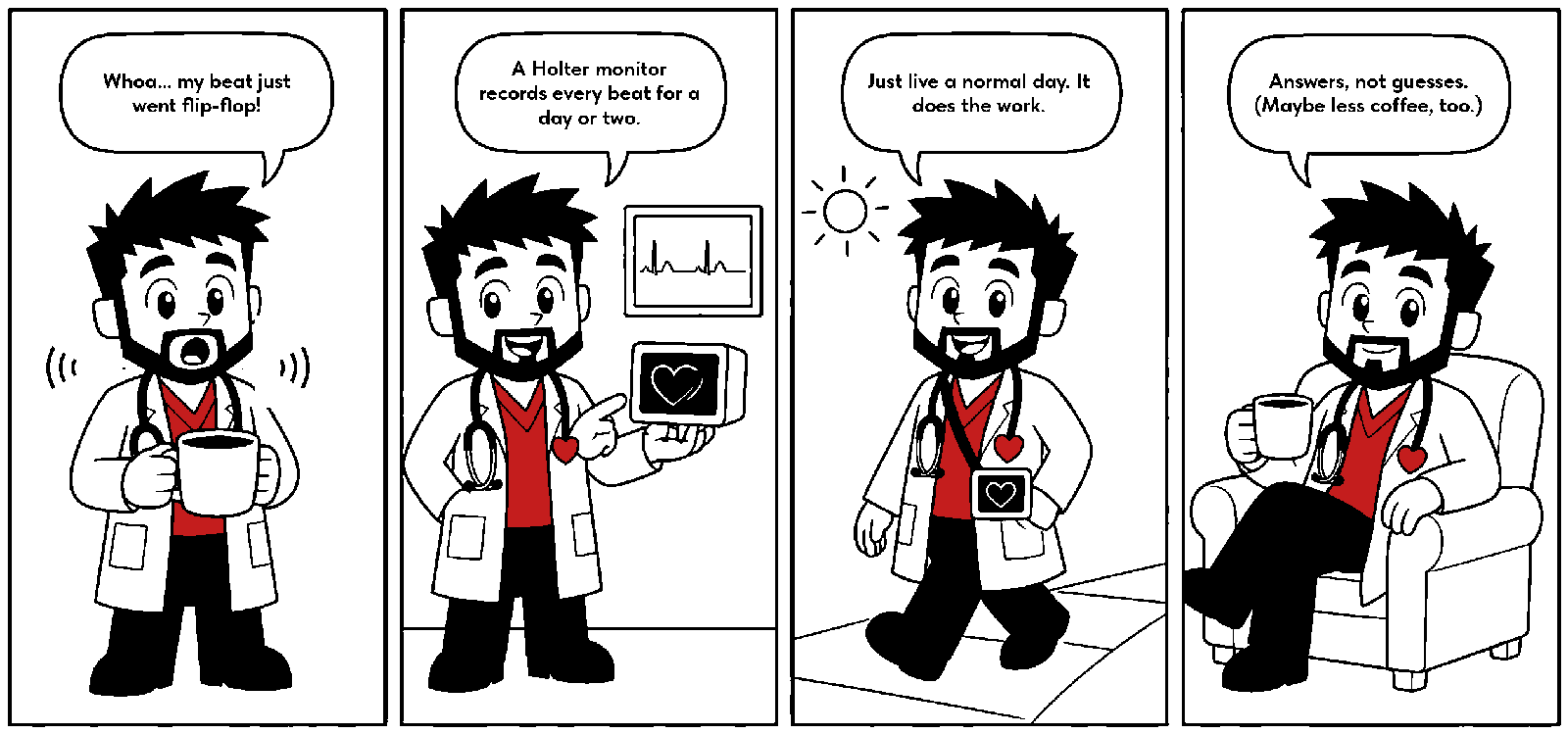
A skipped beat, a pounding heart, a flutter in your chest: palpitations are one of the most common reasons people see a cardiologist. Most of the time the cause is harmless, but some palpitations point to a heart rhythm problem that’s worth finding early.
Common triggers
- Caffeine, energy drinks, alcohol and nicotine
- Stress, anxiety, poor sleep or dehydration
- Some cold medicines, asthma inhalers and supplements
- Fever, anemia or an overactive thyroid
- Extra beats (PACs or PVCs), which are common and often harmless, and rhythm problems such as atrial fibrillation, which need treatment
What you can do now
Cut back on caffeine and alcohol, drink enough water and protect your sleep. If your smartwatch shows an irregular-rhythm alert, save the reading and bring it to your visit. It’s a useful clue, but it isn’t a diagnosis, and a normal reading doesn’t rule out a problem.
How we find the cause
We start with a conversation and an EKG in the office. Because palpitations come and go, we often add a small wearable Holter monitor for a day or two, or a longer event monitor, so we can catch the beat when it happens. If needed, an echocardiogram (heart ultrasound) checks the heart’s structure. Before your visit, jot down when the flutters happen, how long they last and what you were doing.
Call 911 right away if palpitations come with chest pain, fainting or near-fainting, or severe shortness of breath.
Insurance and self-pay
We accept most major insurance plans. No insurance? A consultation is $200, a heart monitor is $300 per week, and our $600 package includes a consultation, EKG, stress test and echocardiogram. Call +1 (347) 308-2378 or book on Zocdoc. We see patients Wednesdays in Brooklyn (Suite 3) and Fridays on Staten Island (upper floor), 9 AM–1 PM and 3–6 PM.

